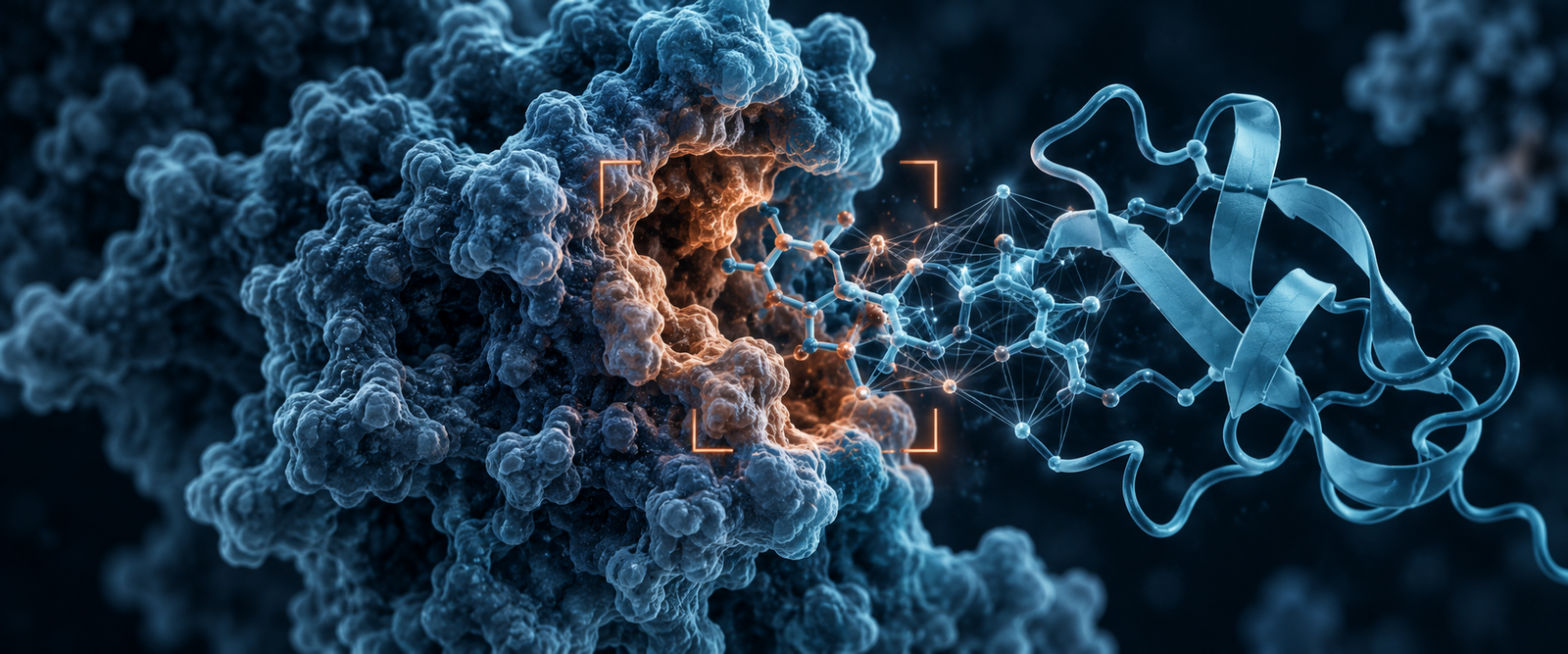
Molecular recognition
Study how a molecular unit could identify the geometry and physicochemical signature of pathological protein conformations while discriminating healthy forms.
Conceptual development
Independent biomedical research initiative · Founded 16 August 2025
NCPRI is pursuing programmable molecular biobots designed to recognize and neutralize pathological prion proteins—an experimental direction toward diseases that medicine cannot yet cure.
Mission & vision
Our present mission
The Institute exists to turn a defined idea into a testable research program: non-self-replicating molecular machines able to distinguish pathological conformations, engage them selectively and deliver a finite neutralizing action.
The biobot research platform
Each front represents a research objective—not a demonstrated treatment. Together, they define the architecture the Institute intends to investigate.
Study how a molecular unit could identify the geometry and physicochemical signature of pathological protein conformations while discriminating healthy forms.
Conceptual development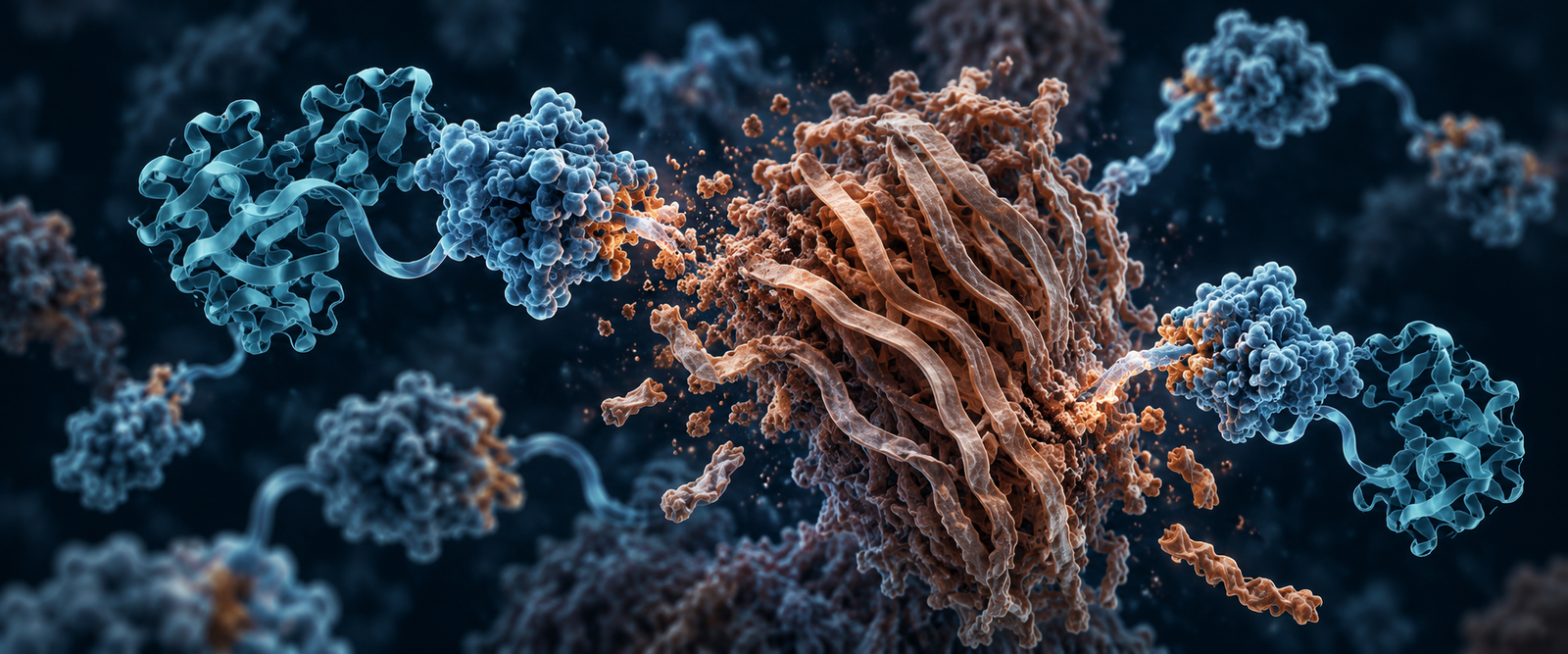
Investigate finite catalytic payloads and other controlled mechanisms capable of disrupting pathological proteins without creating persistent or self-replicating agents.
Mechanism exploration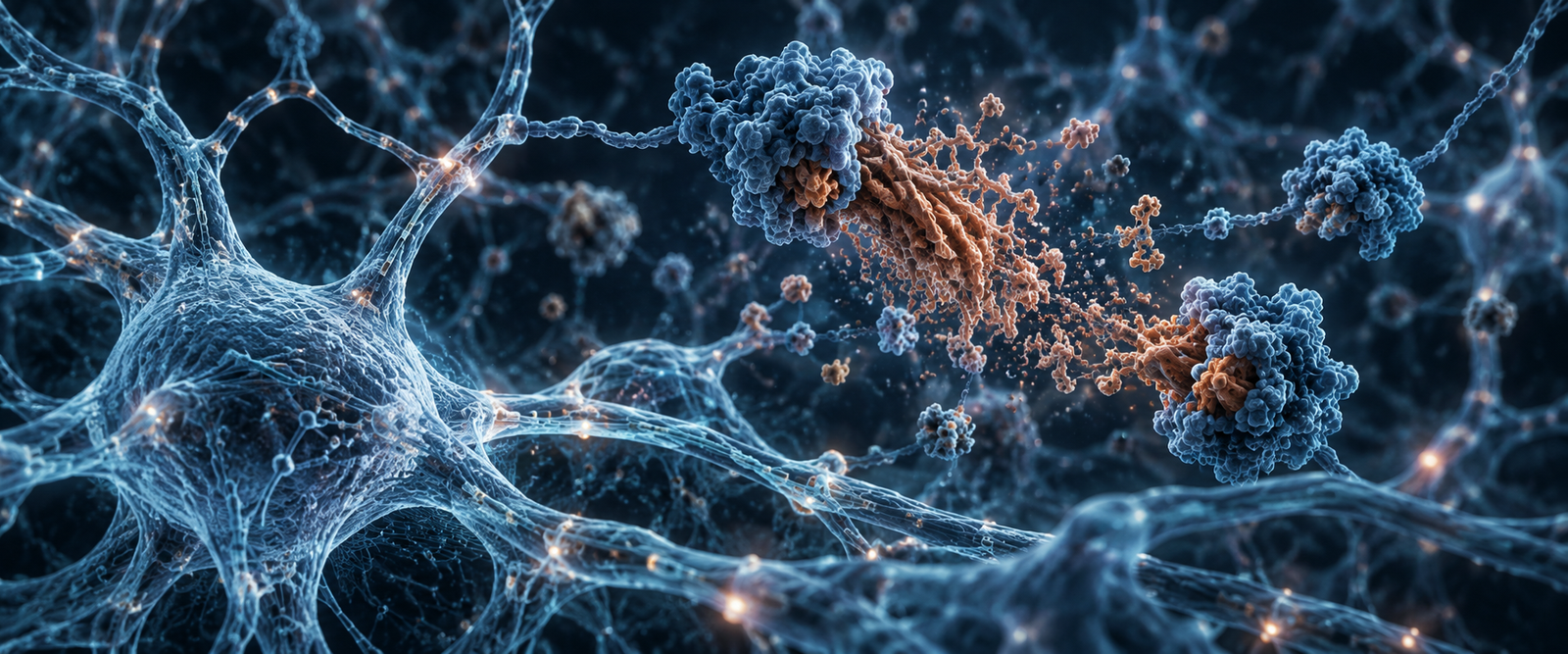
Examine the longer horizon beyond clearance: whether chaperone-mediated refolding, tissue protection or regenerative approaches could address damage already produced.
Long-horizon inquiryA system, not a single molecule
The working concept separates recognition, action and termination so that every stage can be evaluated independently.
Identify a specific pathological conformation or aggregate.
Bind through molecular complementarity and controlled affinity.
Deliver a bounded catalytic or mechanical action.
Prevent persistence, indiscriminate activity and self-replication.
Origins
From an essay to an institution
In June and July 2025, His Majesty Hecktor Nastrova wrote two essays exploring the eradication of prions. The first considered microdoses of antimatter at atomic or molecular scale and was discarded. The second proposed programmable molecular biobots.
On 16 August 2025, that proposal became the founding purpose of the Nastrova–Cârsteanu Prion Research Institute: to produce independent theory and empirical research capable of moving the biobot concept toward physical evidence.
Nastrova–Koray Limit
Proposed on 14 August 2025, the Nastrova–Koray Limit is an abstract framework intended to relate prion quantity to an estimated time of systemic failure while considering genetic predisposition, environmental conditions, stochastic protease distribution and an epsilon error factor.
The limit is not an established biomedical model. Its mathematical formulation, parameterization and empirical usefulness remain to be developed and tested.
Research principles
Concepts, hypotheses and proposed mechanisms are identified as such. A future outcome is never presented as a current scientific result.
The biobot direction explicitly rejects autonomous self-replication and treats persistence and off-target proteolysis as central safety problems.
The Institute’s purpose is to transform an idea into falsifiable stages that can be modeled, tested, rejected or improved.
Current research status
NCPRI is presently a conceptual and pre-experimental research initiative. The mechanisms described on this site have not been demonstrated as safe or effective, are not clinical interventions and should not be interpreted as medical guidance.